How-to guide
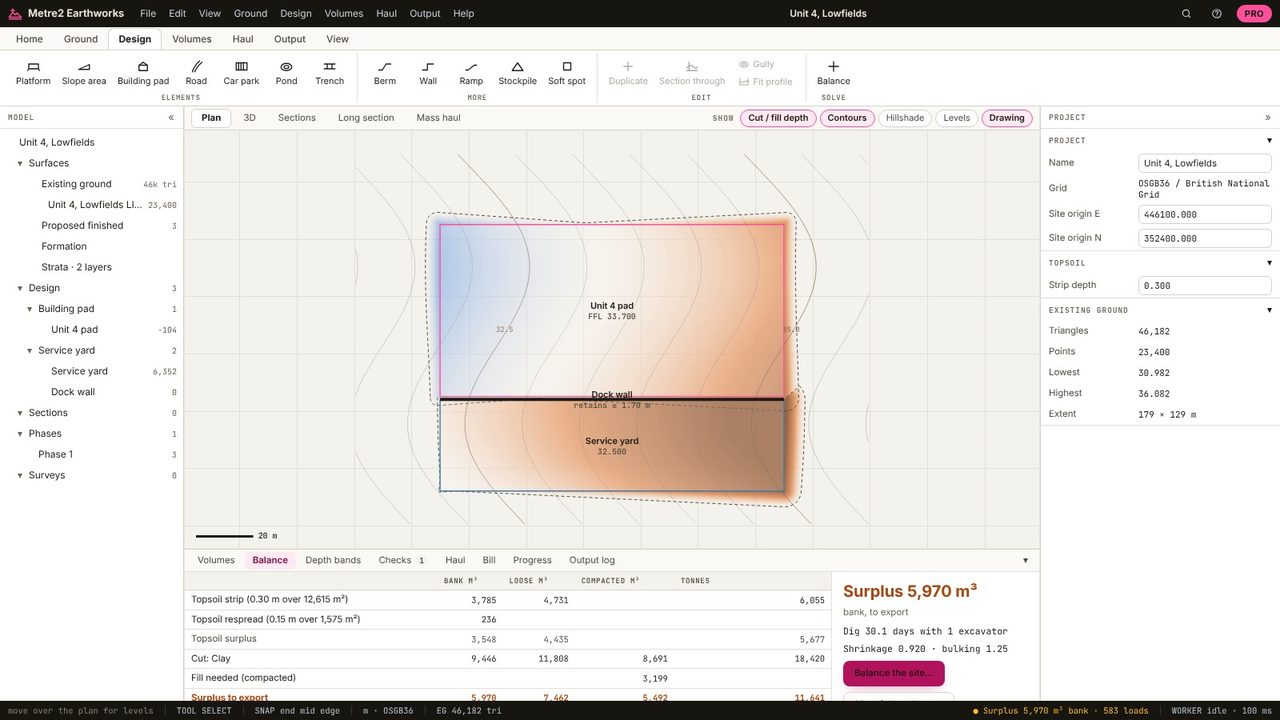
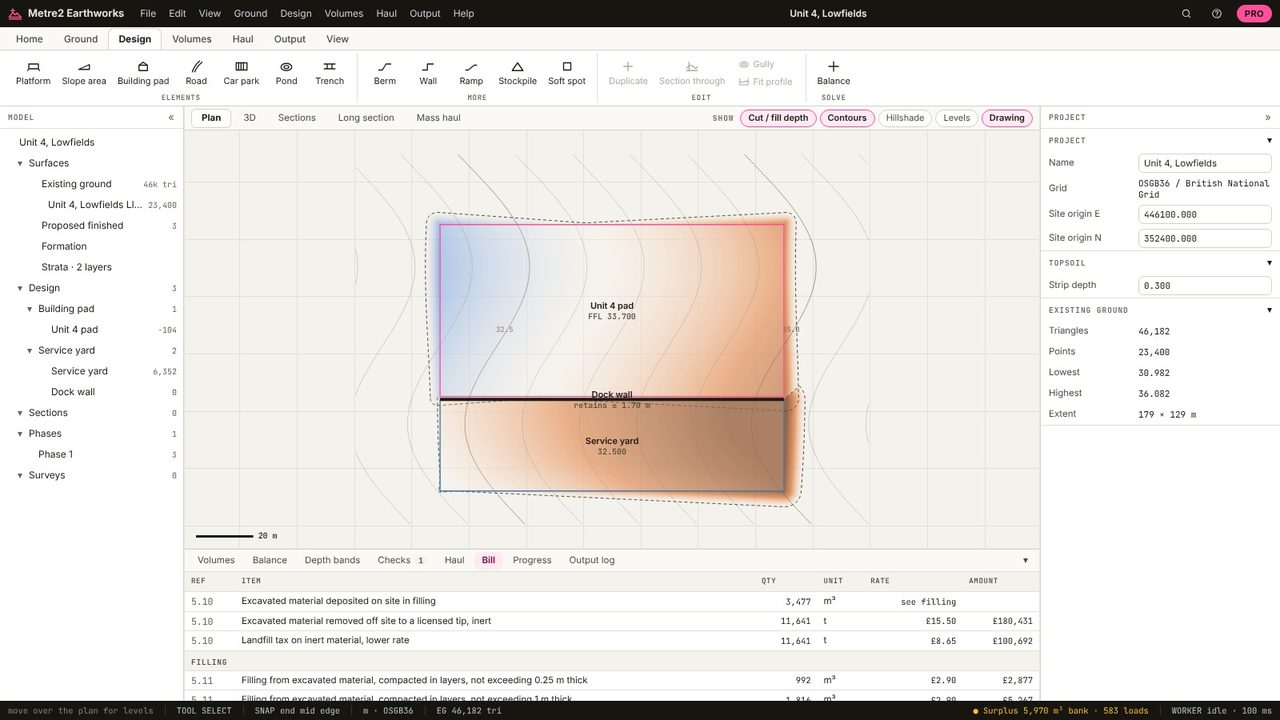
Surplus spoil is priced by the tonne: haulage, the tip's gate fee and landfill tax, which from 1 April 2026 is £8.65 a tonne for inert material and £130.75 for the rest. On a site with a big surplus it can be the largest earthworks cost. This guide reads the surplus of the Unit 4 warehouse sample in Metre2 Earthworks Pro: 5,970 m³ bank, 11,641 t, 583 lorry loads and £100,692 of landfill tax.
The Balance tab gives the surplus after the fill is made: 5,970 m³ bank, 7,462 m³ loose (what the lorries carry) and 11,641 tonnes, about 583 loads of 20 t. Material set to dispose (rock, unsuitable) and soft-spot arisings are added.
The bill's Disposal section prices it by the tonne: the inert surplus to a licensed tip at the gate fee plus haulage (£15.50/t here, £180,431), and landfill tax at the lower rate, £8.65/t: £100,692. Non-inert material goes at the standard rate.
From 1 April 2026: £130.75 a tonne at the standard rate and £8.65 a tonne at the lower rate for qualifying inert material (GOV.UK).
About 1.8-2.0 t per m³ in the bank for clay, less loose. Earthworks uses each material's bank density.
Materials, disposal and the bill are in Earthworks Pro (£19.99 a month or £179 a year, with a 7-day free trial).
No. Earthworks runs in your browser: survey files, LIDAR tiles and PDF drawings are read on your computer and the project is kept in your browser until you save it as a file.