How-to guide
Laying a new drain run and need the invert level at every manhole - and to know none of the runs are too flat? The free Drainage Fall Calculator chains the levels for you and flags shallow falls. It runs in your browser, with nothing to install.
Open the calculator and type the invert level where the run starts - for example the existing manhole you're connecting to, or the level on the drainage drawing. Everything else is chained from this one figure.
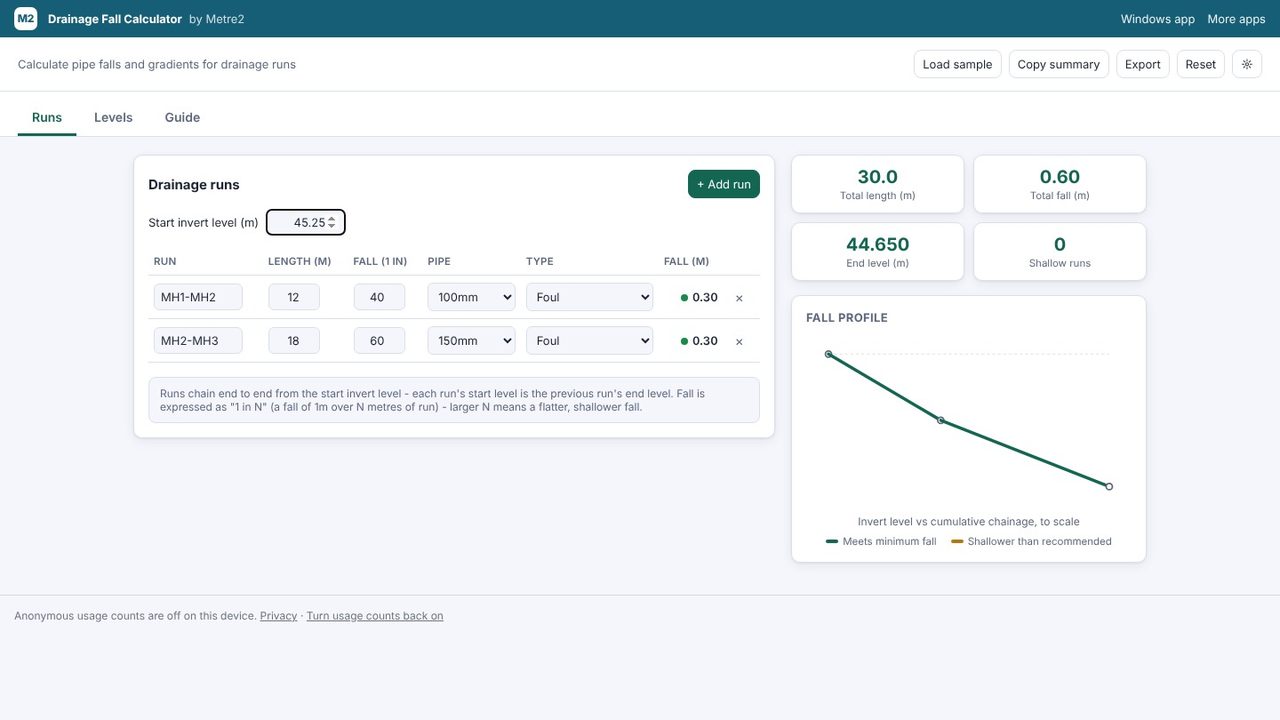
For each run between manholes or chambers, enter its length in metres and its fall as 1 in N - a fall of 1 m over N metres, so a larger N is a flatter pipe. Choose the pipe size and whether it's foul or surface water. The fall in metres is worked out for you.
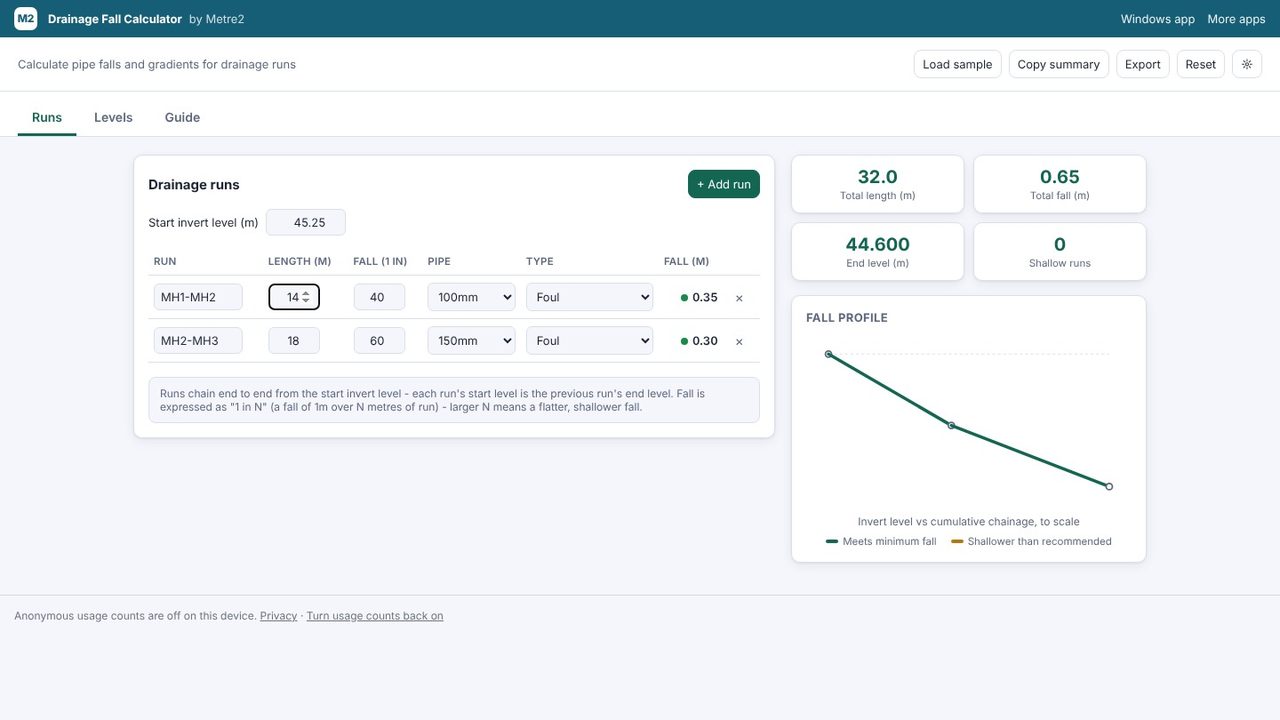
Choose + Add run. Its start level is the previous run's end level, so a whole drain line stays chained together - change any run and every level after it updates.
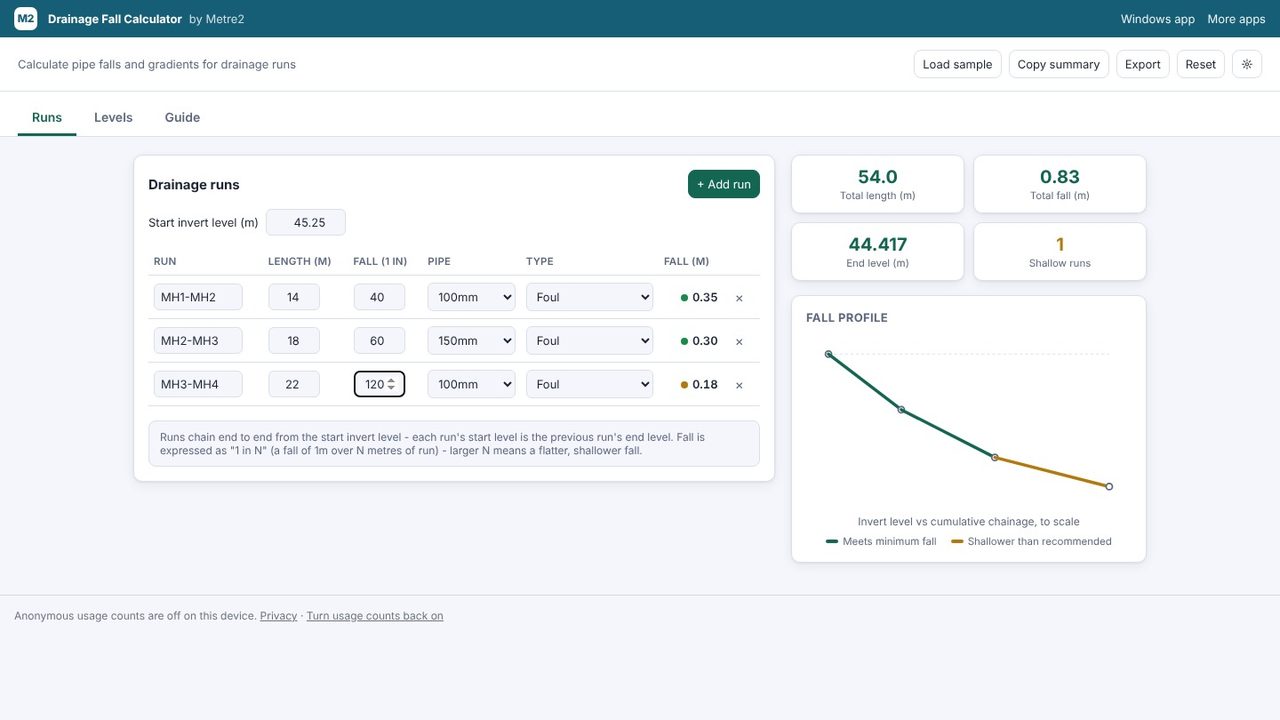
If a run is flatter than the recommended minimum for its size and type, it turns amber in the table and on the fall profile, and the Shallow runs count goes up. Here 1 in 120 on a 100 mm foul pipe is flagged - the calculator's guide uses 1 in 40 for that size.
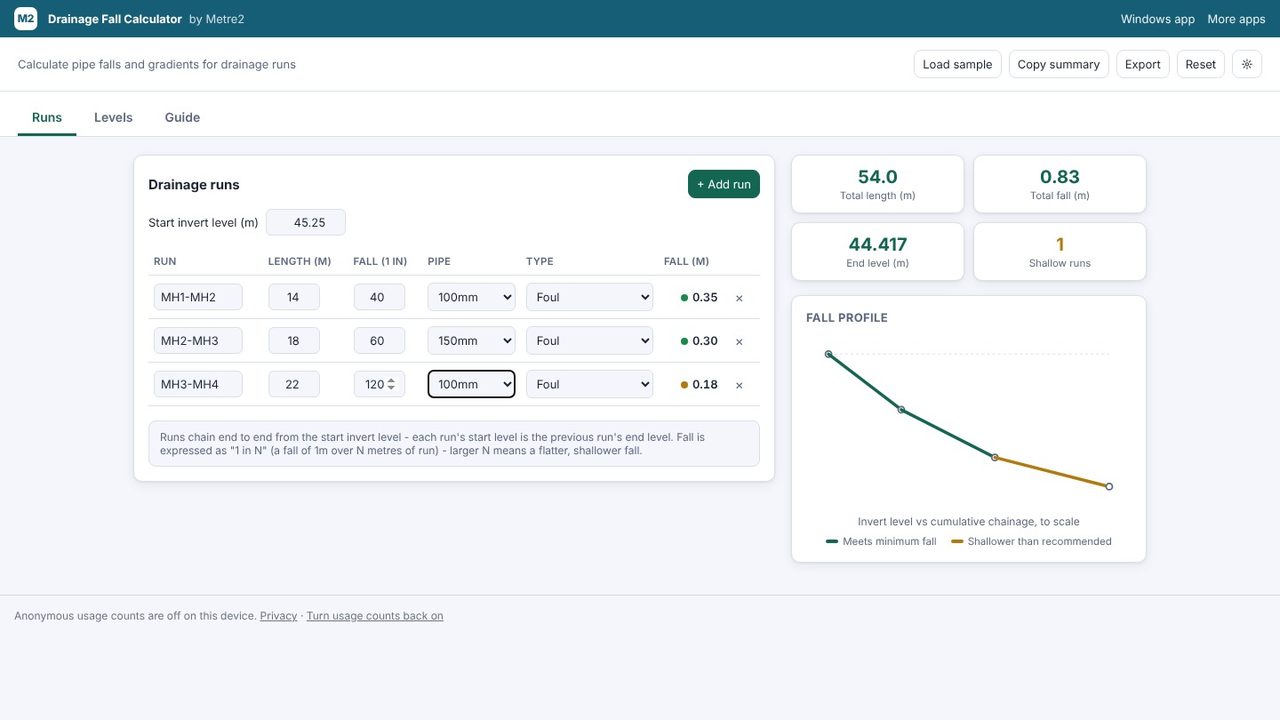
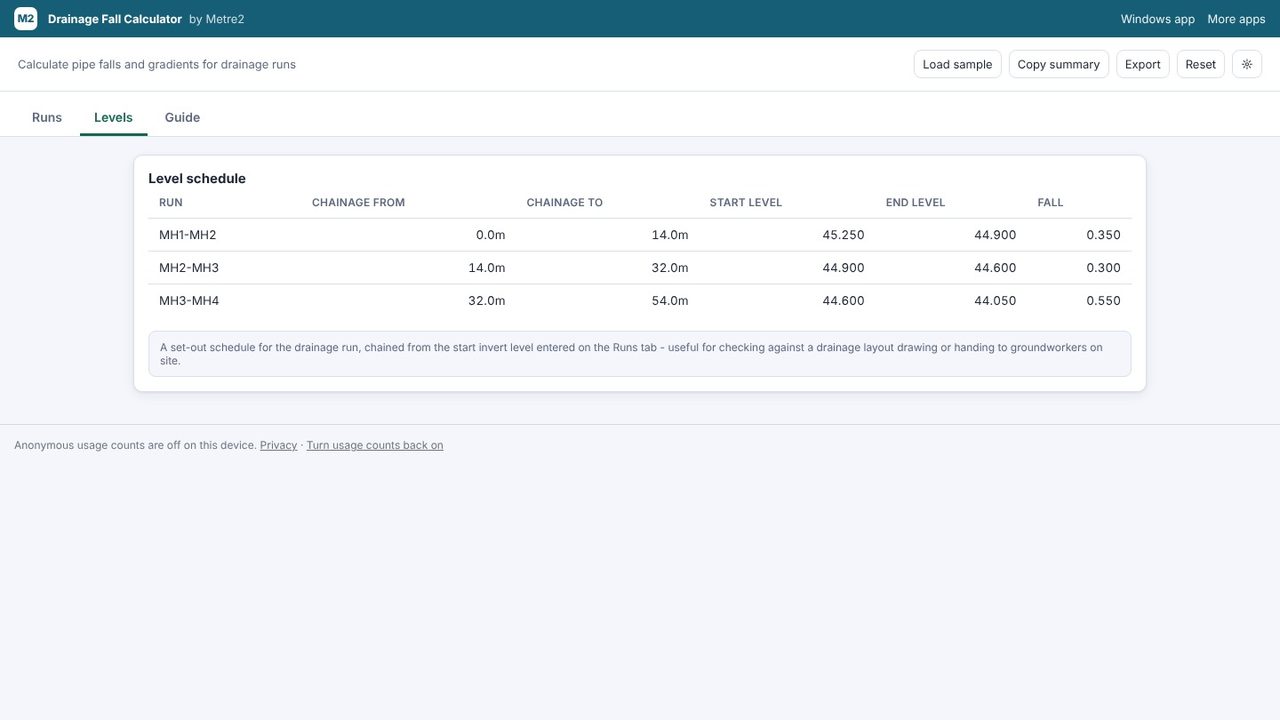
Steepen the run and the flag clears. The Levels tab then gives a set-out schedule - chainage, start level, end level and fall for every run - to check against the drawing or hand to the groundworkers. Export or copy a summary when you're done.
Yes. It's free in your browser with no sign-up, and there's a free Windows app in the Microsoft Store too. It works offline once it has loaded.
The pipe drops 1 m for every 40 m of length - 25 mm per metre. A 1 in 80 fall is 12.5 mm per metre.
No. It's a quick way to chain levels and spot shallow runs. The minimum falls are approximate self-cleansing figures; larger surface water pipes in particular need a proper hydraulic design.